
Bulk Handling
Mar 25, 2026
Industrial Automation | IIoT | Process Intelligence
Industrial automation is entering a new phase. As factories move toward Industry 4.0, the ability to process data instantly, directly at the source, is becoming critical.
Traditional cloud-based systems rely on sending data back and forth, introducing latency, bandwidth limitations, and dependency on network availability.
Industrial edge computing changes this model.
By processing data locally, at the machine, panel, or gateway level, systems can respond in real time, operate more reliably, and make smarter decisions without waiting on the cloud.
👉 Edge computing is no longer optional.
It is becoming the foundation of future-ready industrial systems.
What is Industrial Edge Computing?
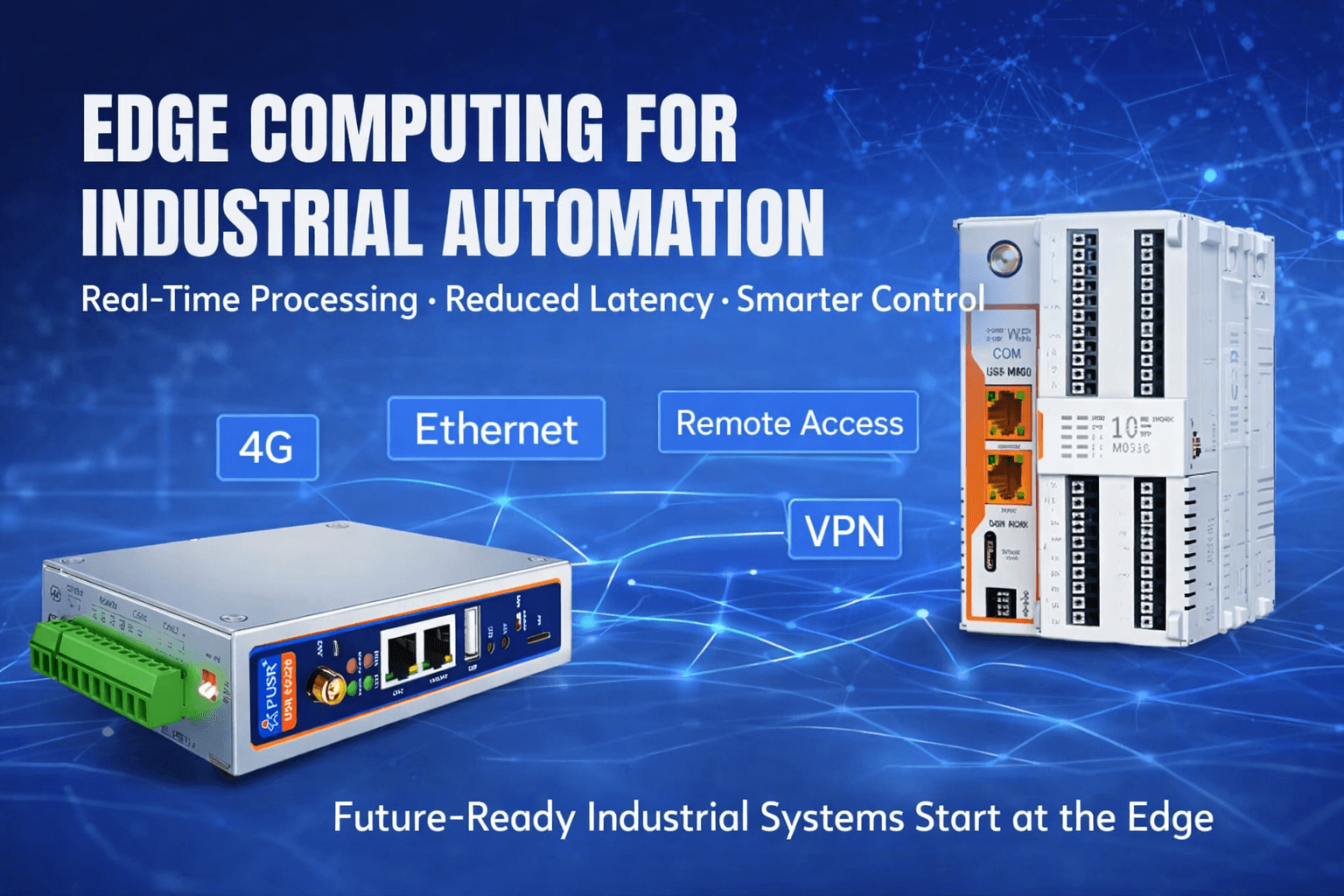
Industrial Edge Computing refers to processing data locally, close to machines, sensors, and control systems, rather than sending all data to a central cloud platform.
In practical terms, this means:
👉 Your PLC, IoT gateway, or edge controller processes data on-site, not remotely.
By analysing and acting on data at the edge, systems can:
Respond instantly to process changes
Reduce reliance on cloud connectivity
Improve system stability and uptime
Enable intelligent automation at the operational level
This creates a faster, more efficient, and highly responsive industrial environment.
Why Edge Computing Matters in Industrial Automation
1. Real-Time Processing
Edge devices process data instantly at the source, enabling immediate control actions without waiting for cloud communication.
2. Reduced Latency
Critical operations, such as alarms, shutdowns, or process adjustments, occur in milliseconds, improving both safety and control accuracy.
3. Reduced Cloud Dependency
Systems continue operating even with limited or unstable internet connectivity, ensuring uninterrupted production and monitoring.
4. Predictive Maintenance Support
Edge platforms analyse trends locally, allowing early detection of faults and performance degradation before failures occur.
Core Edge Computing Devices in Industrial Systems
Edge Data Collection Gateways
Collect data from PLCs, sensors, and serial devices
Filter and preprocess data before transmission
Enable protocol conversion and system integration
Industrial IoT Controllers / Edge Computers
Execute advanced logic, automation workflows, and analytics
Support Linux-based environments and custom applications
Act as central hubs for edge intelligence
Modular IO Controllers
Provide scalable input/output expansion
Enable precise control and data acquisition
Interface directly with field devices
Built for Modern Industrial Environments
Industrial edge devices are engineered for reliability, flexibility, and integration:
Multi-protocol support (Modbus, MQTT, OPC-UA)
Connectivity options: Ethernet, RS485, WiFi, 4G
DIN-rail and panel mounting options
Wide operating temperature range (–20°C to +70°C)
Modular expansion for customised system design
Applications Across Industries
Edge computing is transforming operations across multiple sectors:
Manufacturing – Real-time monitoring and process control
Utilities & Energy – Predictive maintenance and asset management
Mining & Agriculture – Distributed automation across remote sites
Infrastructure & Smart Cities – Scalable IoT deployments
Legacy System Integration – Bridging old systems with modern networks
From Data Collection to Intelligent Control
Edge computing shifts industrial systems from passive monitoring → active decision-making.
Instead of simply collecting data, systems can now:
Analyse conditions in real time
Trigger automated responses locally
Optimise performance continuously
👉 This results in:
Higher efficiency
Reduced downtime
Faster response to process changes
Conclusion: Building Future-Ready Industrial Systems
Industrial Edge Computing is not just an incremental upgrade, it is a fundamental shift in how industrial systems operate.
By bringing intelligence closer to the process, it enables:
Faster decision-making
Greater system resilience
Scalable and flexible automation
APS Technology’s edge computing solutions, combining industrial gateways, IoT controllers, and modular IO systems, provide the foundation for building intelligent, connected, and future-ready industrial environments.
Build smarter, faster industrial systems with edge intelligence.
👉 Learn more about Industrial Edge Computing solutions:
https://aps-technology.com.au/product/industrial-edge-computing
