
News
May 11, 2026
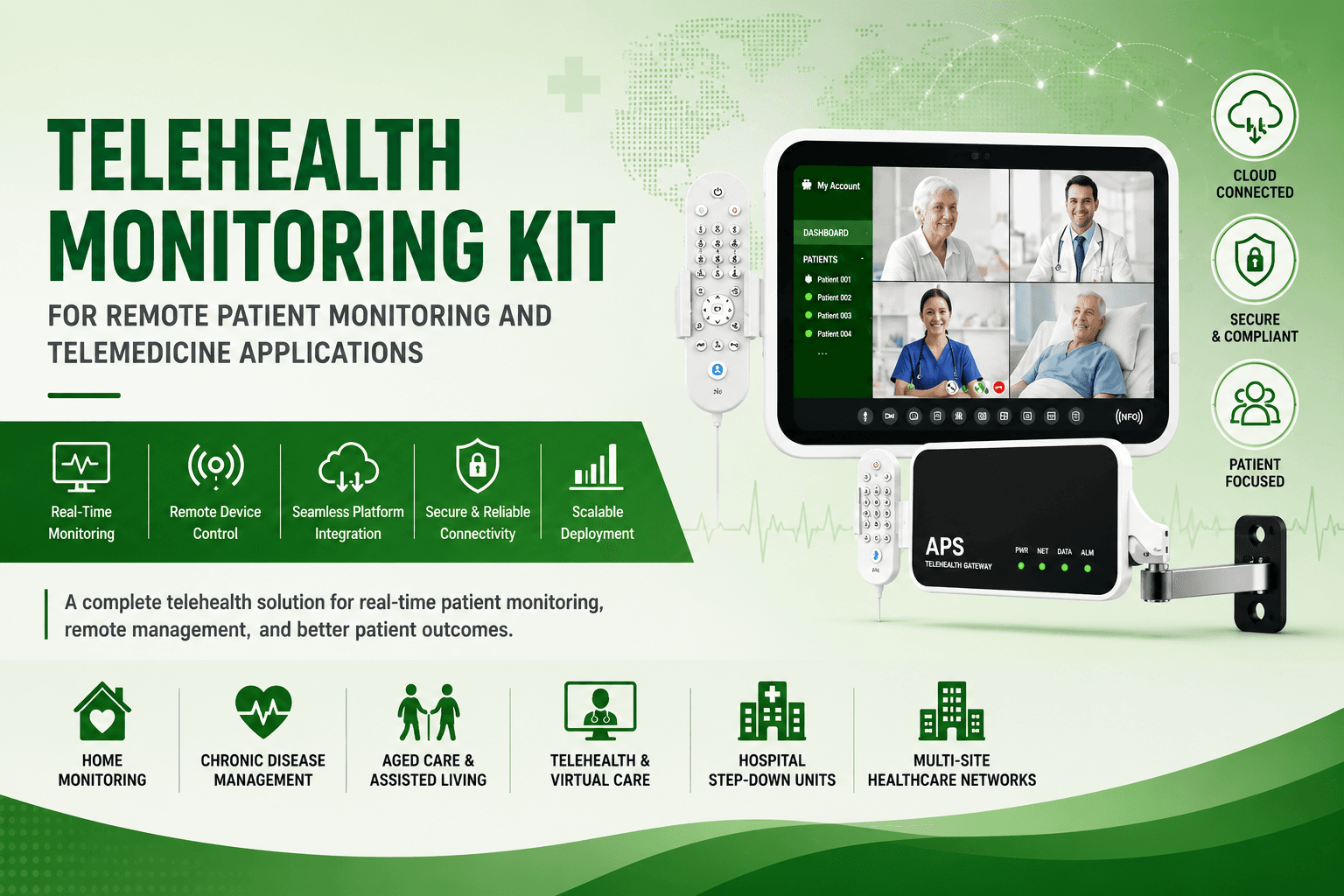
Healthcare delivery is rapidly evolving, with telehealth and remote patient monitoring becoming increasingly important across hospitals, aged care facilities, clinics, and home healthcare environments.
Modern telehealth monitoring systems allow healthcare providers to monitor patient vital signs remotely, reduce operational burdens, and improve access to care without requiring continuous physical presence.
One of the key technologies supporting this shift is the Telehealth Monitoring Kit.
What is a Telehealth Monitoring Kit?
A telehealth monitoring kit is an integrated system designed to remotely monitor patient vital signs while enabling communication between medical devices and telehealth platforms.
These systems typically support monitoring parameters such as:
SpO₂
Pulse rate
Temperature
NIBP
ECG
By combining continuous monitoring with remote device interaction and healthcare platform integration, telehealth kits help clinicians deliver more responsive and scalable patient care.
Why Remote Patient Monitoring Matters
Remote monitoring technology helps healthcare providers:
Reduce unnecessary hospital visits
Monitor patients outside traditional clinical settings
Improve chronic disease management
Support aged care and assisted living environments
Enhance continuity of care after discharge
Real-time access to patient data also enables faster intervention when patient conditions change.
Supporting Modern Digital Healthcare
Modern telehealth systems are designed for integration with healthcare infrastructure and electronic medical record systems.
Features such as HL7 compatibility, centralized device management, and scalable deployment allow healthcare providers to support both small-scale and enterprise-level telehealth programs.
Applications Across Healthcare Environments
Telehealth monitoring kits are increasingly used for:
Home healthcare
Virtual care programs
Clinical trials
Step-down recovery monitoring
Chronic disease management
Multi-site healthcare networks
As digital healthcare continues to expand, remote monitoring solutions will continue to play a major role in improving healthcare accessibility and operational efficiency.
